
Preserved Rose Glass Dome: A Buyer's Guide to Selection and Verification
A practical guide for sourcing preserved rose glass domes, covering materials, LED and soap flower variants, quality checks, and questions to ask suppliers.
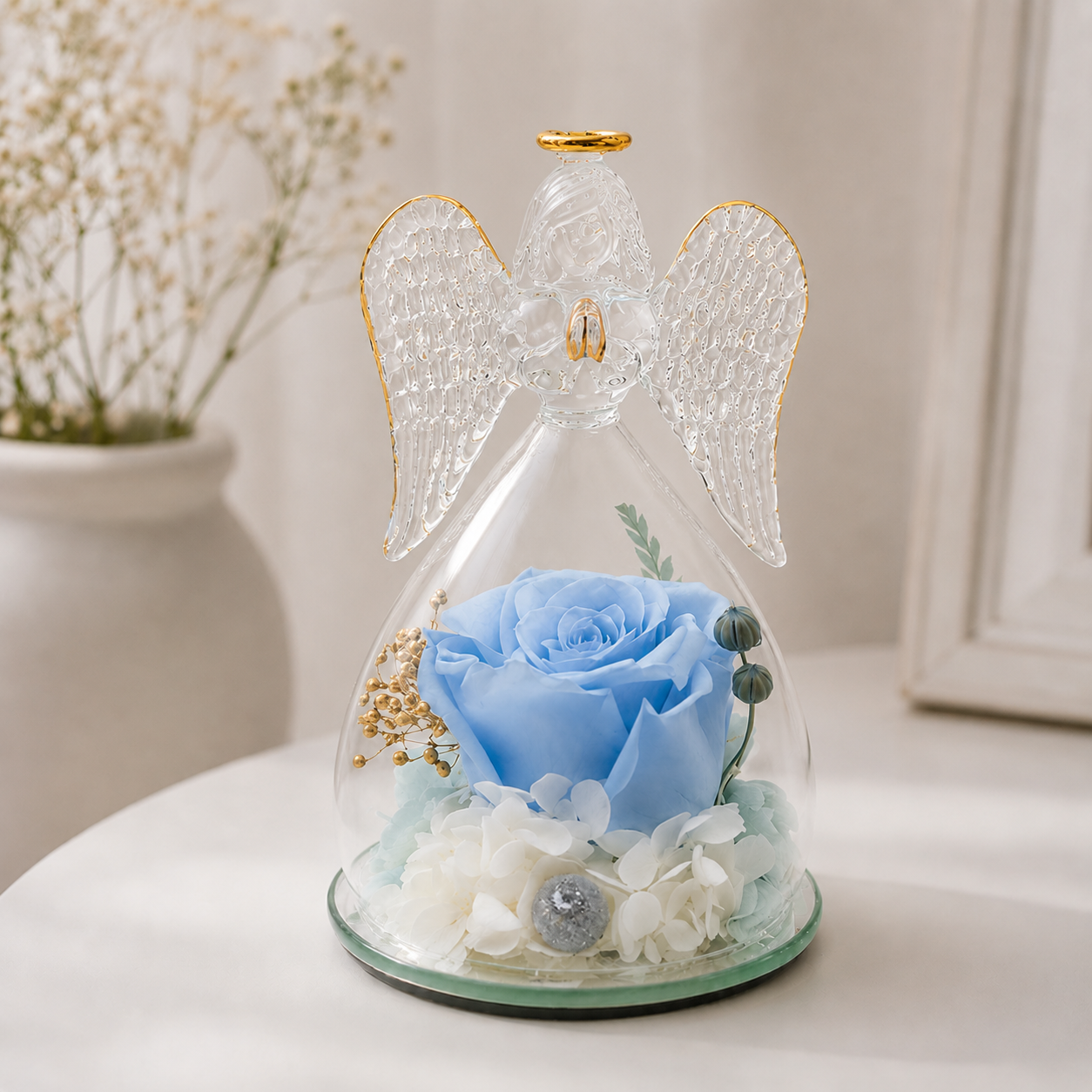
What a preserved rose glass dome is—and what it is not
A preserved rose glass dome is a decorative arrangement in which a real rose that has been treated to hold its shape and color is placed under a transparent glass or plastic cover, often on a base that may include a light. The cover protects the flowers from dust and handling, and the enclosed display is intended for desks, bedside tables, and similar small spaces.
It is not a living plant. Preserved flowers are real flowers that have undergone a preservation process—commonly described as fresh-locking or color-locking technology—so they do not need watering. The reference products here describe preserved flowers as maintaining a plump appearance for a long time or for years, but actual longevity depends on the preservation method, the environment, and how the dome is handled. Treat any specific lifespan claim as something to verify with the supplier rather than a fixed specification.
Buyers often encounter three related product types under this topic:
- Preserved rose domes using real preserved roses, sometimes with hydrangeas, baby's breath, and dried accents.
- Floral LED ornaments where a warm LED string is embedded in the base to add a soft glow.
- Soap rose domes where the roses are made from soap rather than preserved flowers, offering a fragrant, non-perishable alternative.
Each type serves a different buyer need. The sections below explain the trade-offs and the checks that matter before you commit to an order.
Preserved flowers vs soap flowers: a practical comparison
The choice between preserved roses and soap roses affects perceived value, fragrance, care, and how the gift is positioned. The table below summarizes the differences based on the supplied product descriptions. Where a property is not stated in the evidence, it is marked as needing verification.
Attribute Preserved rose dome Soap rose dome Flower material Real flowers treated with preservation technology Soap formed into rose shapes Watering required No No Fragrance Not specified in the reference products; verify with supplier Softly fragrant, per product description Longevity claim Described as maintaining appearance for a long time; one product states years Described as maintaining form without deforming or fading for a long time Dome material options Glass (high-transparency, dustproof) Plastic dome (high-transparency, dustproof) Typical use context Romantic gifts, anniversaries, home decor Birthdays, Teacher's Day, keepsakesPreserved roses carry the weight of real flowers and are often chosen when the gift should feel premium or lasting. Soap roses can be a lower-cost option with a built-in fragrance, but the buyer should confirm whether the soap scent is acceptable for the intended recipient and whether the soap material is stable over time in the target climate.
One practical warning: the term "preserved" is sometimes used loosely. Ask the supplier to describe the preservation process and to provide a sample so you can assess colorfastness and petal firmness yourself.
LED lighting: function, safety, and what to confirm
An LED floral ornament adds a warm glow that can double as a gentle night light. In the supplied products, the LED string is embedded in the base and casts a soft, cozy light. That is a useful feature for bedside and desk placement, but it introduces electrical and battery considerations that a plain dome does not have.
Before ordering LED domes, clarify these points with the supplier:
- Power source: battery, USB, or another method. The reference products do not specify; confirm what is included.
- Battery accessibility: whether the battery compartment is user-replaceable and how it is sealed.
- Switch type: manual, touch, or timer, and where the switch is located.
- Safety and compliance: any required marks or documentation for the destination market. This is not stated in the reference data and must be verified.
- LED lifespan and replaceability: whether the light string can be serviced or is sealed into the base.
For gift programs, also consider whether the LED is intended as a primary feature or an accent. A light that is too bright can undermine the preserved flower display; a light that is too dim may disappoint. Request a sample lit in a dim room to judge the effect.
Dome and base materials: glass vs plastic, wood vs matte black
The dome is the most visible structural element. The supplied products show two approaches: a high-transparency curved glass cover with a natural wood base, and a high-transparency plastic dome with a matte black base. Both are described as dustproof and easy to maintain with a wipe.
Glass generally offers a more premium feel and scratch resistance, but it is heavier and more fragile in transit. Plastic is lighter and may reduce shipping damage risk, but it can scratch and may look less refined over time. Neither material is inherently better; the right choice depends on price positioning, shipping distance, and the handling the product will receive.
Base material affects both appearance and stability. A natural wood base suits cream, wood-toned, and minimalist decor. A matte black base reads more modern and can contrast with soft flower palettes. Check that the base has enough weight that the dome does not tip easily, especially the taller bell-shaped designs.
Ask for the dome's wall thickness and clarity grade if the supplier states them, and inspect a sample for visible seams, bubbles, or distortion. The reference products describe high-transparency covers but do not give measured thickness, so treat thickness claims as supplier-specific.
Selection criteria for buyers and gift programs
Use the following criteria to narrow the range. They are written for a buyer assembling a gift line, but they apply equally to an individual choosing a single piece.
1. Occasion and recipient
Preserved rose domes with angel or religious motifs suit blessings, get-well gifts, and housewarmings. Bouquet-style domes lean romantic and fit Valentine's Day, anniversaries, and confessions. Soap rose domes are positioned for birthdays, Teacher's Day, and keepsakes. Match the motif to the occasion rather than relying on color alone.
2. Color palette
The supplied products list palettes such as classic red, ice blue, vintage reddish-brown, peach pink, creamy champagne, light nude pink, purple, and white-green. Confirm that the palette is consistent across reorders, because natural preserved flowers can vary slightly between batches. Ask how the supplier manages color consistency.
3. Size and placement
These are compact items intended for desks, bedside tables, and vanities. Check the actual dimensions and footprint, especially if the dome will sit on a narrow shelf. The reference products describe compact sizes but do not give measurements; request them.
4. Packaging and transit protection
Glass domes need protective packaging. Ask how the dome is boxed, whether the LED (if present) is protected, and whether the packaging is suitable for direct-to-consumer shipping or only for retail shelves. The reference data does not describe packaging, so this must be confirmed.
5. Documentation and labeling
For retail, you may need product labels, material statements, and care instructions. The reference products do not specify what documentation is provided. Clarify what the supplier can supply and what you must create.
Quality checks before you commit
A sample review is the most reliable way to judge a preserved rose glass dome. The checklist below focuses on points that are visible and testable without laboratory equipment.
- Flower condition: petals should look plump and intact, with no crushed edges, visible glue, or uneven color.
- Arrangement: the bouquet should sit securely and not shift when the dome is gently tilted.
- Dome clarity: look for scratches, haze, bubbles, or distortion that would obscure the flowers.
- Base finish: wood should be smooth and free of splits; matte finishes should be even.
- LED function: switch on and off several times, check for flicker, and confirm battery access if applicable.
- Dust seal: the dome should sit flush enough to limit dust entry, while still being removable if the design requires it.
- Odor: preserved flowers may have a faint treatment smell; soap flowers should smell pleasant, not chemical. Judge whether the odor is acceptable for an enclosed gift.
If you are ordering in volume, ask for a pre-production sample from the actual production line, not a specially prepared showroom piece. Note any differences between the sample and the bulk order in writing.
Limitations and care expectations
Preserved and soap flowers are not indestructible. The supplied descriptions emphasize no watering and low maintenance, but they do not promise resistance to direct sunlight, high humidity, or heat. As a practical matter, keep these domes away from prolonged direct sun and damp rooms, and handle the dome by the base rather than the cover.
LED components add a dependency on batteries or power. If the light fails, the dome may still function as a decorative piece, but the feature that justified part of the price is gone. Confirm how the supplier handles LED defects before you order.
Finally, longevity statements should be read as marketing descriptions unless backed by test data. The reference products use phrases such as "for a long time" and "for years." Ask for the basis of any specific duration claim, and do not repeat it to your own customers without verification.
Questions to ask a preserved flower supplier
These questions are designed to surface gaps that a product photo will not show.
- What preservation method is used, and can you share a sample that has been stored for several months?
- What are the exact dome dimensions, wall thickness, and base dimensions?
- Is the dome glass or plastic, and what is the stated clarity or thickness?
- For LED versions, what is the power source, battery type, and expected LED life?
- What packaging is used, and has it been tested for drop or transit damage?
- What documentation can you provide for materials, safety, and care instructions?
- How do you manage color consistency between batches?
- What is the process if a sample differs from bulk production?
Record the answers and attach them to your purchase order. Verbal assurances are difficult to enforce later.
Next steps for a sourcing decision
Start by defining the occasion, recipient, and price positioning for the dome you need. Then choose between preserved and soap flowers, decide whether LED lighting is essential or optional, and select a dome and base material that matches your shipping and display conditions. Request samples from more than one supplier if possible, run the quality checks above, and resolve any documentation or packaging questions before placing a bulk order. The goal is a product that looks right in the room, arrives intact, and meets the claims you intend to make about it.